
How to Get Into Harvard: An Honest Guide for High School Students
Harvard College admits roughly 4 in every 100 applicants. For the Class of 2029, that meant 2,003 students out of 47,893 who applied, for an acceptance rate of 4.2%. The rate has held below 5% for eight consecutive years, and there is no credible reason to expect it to improve.
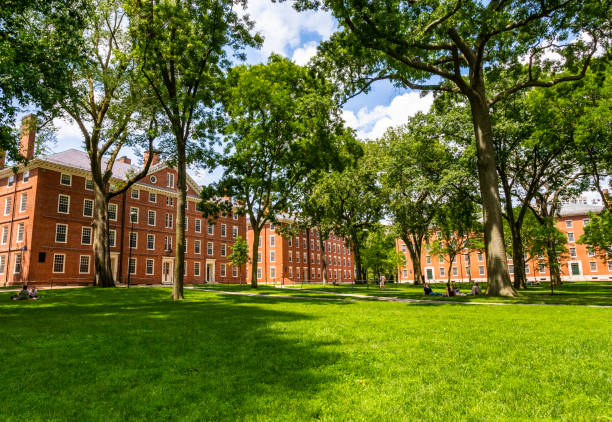
Aerial view of Harvard Yard in Cambridge, Massachusetts, showing the historic red-brick buildings and tree-lined paths of Harvard's main campus
With this guide, we aim to walk you through every component of a Harvard application honestly, what the admissions office actually says it values, what the data shows about admitted students, and what specific steps you can take to build the strongest possible application. This is the guide you'd want from someone who has been through it, understands how the process works, and is willing to tell you the truth.
One practical note before diving in: many students who aspire to Harvard understand the importance of academic rigor and intellectual initiative but are unsure how to demonstrate it concretely. Working on independent research before you apply, especially in a domain you plan to study, is one of the most direct ways to show the depth of intellectual engagement Harvard is looking for. Structured programs likeVeritas AI give motivated students the mentorship and project structure to do that kind of work rigorously, resulting in a completed research project they can actually speak to in their application. More on that below.
What is Harvard’s acceptance rate?
The first thing to understand is what a 4.2% acceptance rate actually means in practice. Harvard does not reject 96% of applicants because most are unqualified. According to Harvard's own admissions data, the admissions process is holistic and labor-intensive precisely because most applicants who reach committee review are academically exceptional. The filter isn't primarily academic. It's a question of who brings something rare, authentic, and distinctive.
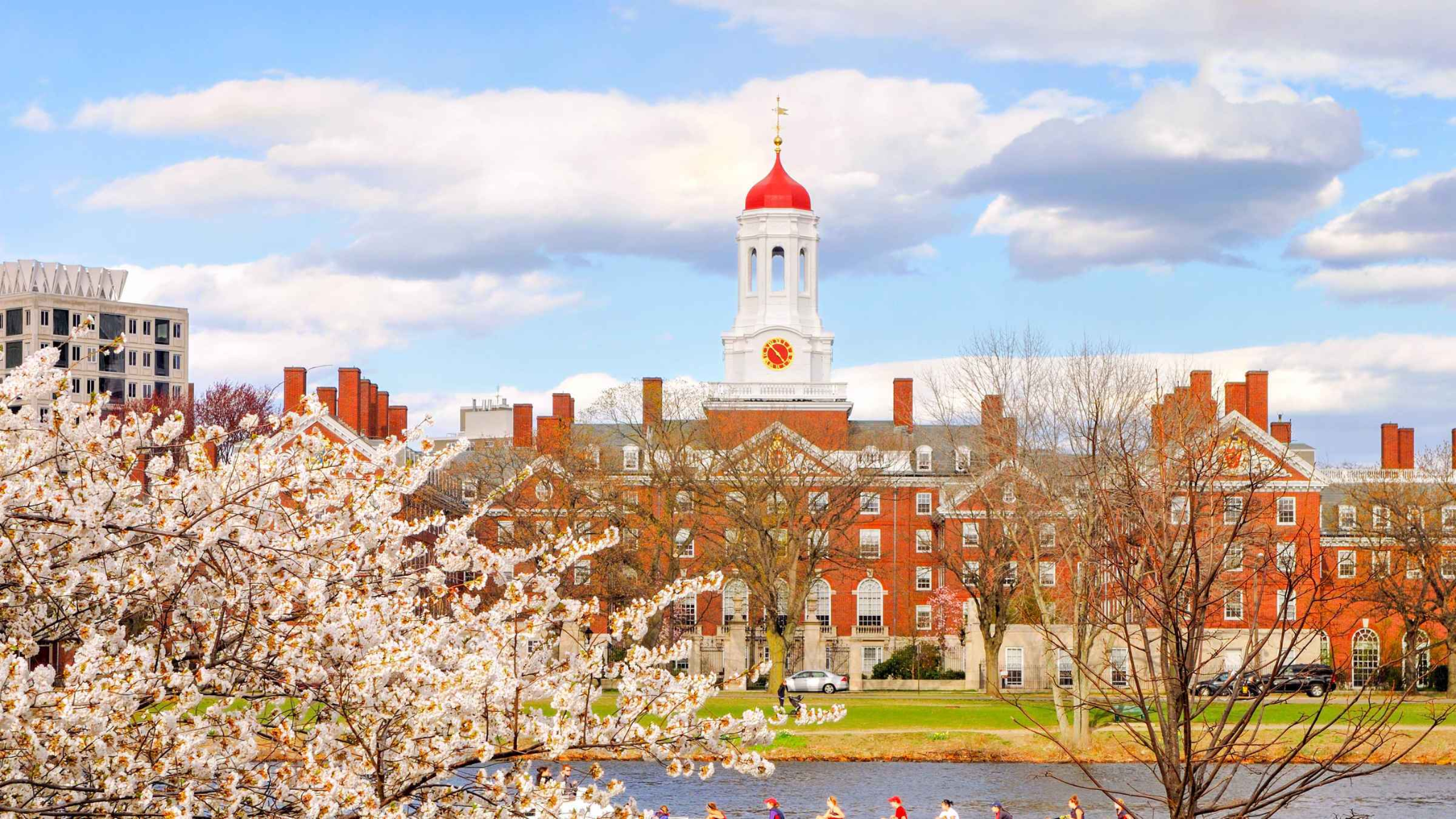
The exterior of Widener Library at Harvard University, one of the largest academic libraries in the world and a landmark of Harvard's campus in Cambridge
Early Action (Harvard calls it Restrictive Early Action, or REA) applicants have historically seen higher acceptance rates than regular decisions. For the Class of 2028, the REA rate was around 9%, compared to roughly 2.8% in the regular round. That said, Harvard explicitly states there is no admissions advantage to applying early, and the Acely admissions guide advises applying REA only if your application is fully ready by November 1. A stronger application in January is better than a rushed one in November.
What are the academic requirements for a high school student applying to Harvard?
GPA
Harvard does not publish a minimum GPA. The reality, however, is stark. According to Crimson Education's analysis of Harvard's Common Data Set, 72.4% of enrolled students reported a perfect 4.0 unweighted GPA, with another 22.2% between 3.75 and 3.99. That means approximately 95% of enrolled students had an unweighted GPA above 3.75.
The more important point: Harvard reads transcripts in context. A 3.9 earned across the most demanding curriculum your school offers carries more weight than a 4.0 from an undemanding course load. Admissions readers evaluate course rigor explicitly. The question isn't just what grade you got, but what classes you chose to take and how you performed in them. Taking AP, IB, or dual enrollment courses in your areas of interest and excelling in them is more important than protecting your GPA by avoiding challenges.
Average weighted GPA of admitted students: 4.21. Middle 50% unweighted range: 3.9 to 4.0.
Standardized Tests
Harvard reinstated its standardized testing requirement starting with the Class of 2029, ending the test-optional policy that had been in place since 2020. SAT and ACT scores are now required for all applicants, though Harvard notes that in exceptional circumstances where a student genuinely cannot access testing, alternatives like IB, AP, or A-Level results may be considered.
The data on admitted students:
SAT middle 50%: 1510 to 1580
ACT middle 50%: 34 to 36
Average SAT: approximately 1520
Average ACT: 34
From our research, Harvard expects near-perfect test performance. A score below 1500 SAT or 33 ACT is not disqualifying, but it requires compensating strength elsewhere, particularly in extracurriculars, research, or an exceptional personal story. Scores above the 75th percentile (1570+ SAT, 36 ACT) don't guarantee admission but remove any doubt about academic readiness.
A practical note: the return of testing requirements correlates with a drop in applications. Fewer students applied for the Class of 2029 than the Class of 2028, which may have contributed to the slight uptick in acceptance rate from 3.6% to 4.2%. That is a thin margin, but it reflects the real sensitivity of the rate to application volume.
How does Harvard read student applications?
Harvard uses a 1-6 rating scale across six components of the application, with 1 being the highest. The six categories are: academic, extracurricular, athletics, personal, recommendation letters, and alumni interview. Per College Advisor's breakdown, an application with a 2- overall or better typically advances to committee review. Most admitted students hold a 1 or 2 in academic and personal ratings.
The key insight from the rating system: academic and extracurricular scores are weighted most heavily. A high athletic score can elevate an application, but it rarely compensates for a weak academic or personal score. Conversely, per Ivy League Scholars, students scoring a 1 in academics and personal qualities are "almost always accepted."
Harvard's official What We Look For page frames the personal dimension this way: "What about your maturity, character, leadership, self-confidence, warmth of personality, sense of humor, energy, concern for others, and grace under pressure? Will you contribute something to Harvard and to your classmates?" That language is not filler. It is a description of what the personal rating measures.
How does Harvard view extracurricular activities?
Harvard does not want well-rounded students. It wants a well-rounded class composed of students who are each distinctively excellent at something. The "spike" model, a deep investment in one or two areas where you have achieved genuine distinction, is consistently what separates admitted students from the broader pool of highly qualified applicants.
Admissions officers evaluate activities on a tiered scale. Per CollegeVine's guide to Harvard admissions, Tier 1 represents the rarest and most exceptional achievements, such as being a state-ranked athlete, winning a national academic competition, publishing original research, or founding an organization with demonstrable community impact. Tier 2 includes statewide or regional distinction. Tiers 3 and 4 cover deep local involvement without external recognition.
For a realistic Harvard application, you want at least one Tier 1 or strong Tier 2 activity. More importantly, your extracurricular narrative should be coherent. A student who has spent three years going deep in one direction tells a cleaner story than one who has accumulated a long list of superficial memberships.
What Harvard scores the highest in extracurriculars: national or international distinction with evidence of future growth potential. What it values in the personal rating: qualities of character that can't be manufactured, warmth, resilience, curiosity, the sense that this person will make the people around them better.
What are the application components?
1. The Common App Personal Statement
Harvard receives a personal statement through the Common App or Coalition App. The essay should reveal something genuine about you that is not already evident from the rest of your application. Per AdmissionSight's guide, admissions readers can identify manufactured authenticity immediately, and the personal statement is where it shows most clearly.
The strongest personal statements are specific, not generic. They don't talk about passion in the abstract. They describe a moment, a decision, a failure, or a realization with enough particularity that the reader understands something true about who you are. College Essay Guy's guide is one of the most practically useful free resources available for approaching the personal statement with real craft.
2. Harvard's Supplemental Essays
For the 2025-2026 cycle, Harvard requires five supplemental essays, each capped at 150 words. The five prompts are:
How will the life experiences that shaped who you are today enable you to contribute to Harvard?
Describe a time when you strongly disagreed with someone about an idea or issue. How did you communicate or engage with this person?
Briefly describe any of your extracurricular activities, employment, travel, or family responsibilities that have shaped who you are.
How do you hope to use your Harvard education in the future?
Top 3 things your future roommate should know about you.
At 150 words each, every sentence must do work. AdmissionSight's supplemental essay guide and PrepMaven's breakdown are both strong resources for understanding what Harvard is actually asking in each prompt. The broad consensus from counselors and former admissions officers: specificity beats generality every time. Don't describe who you aspire to be. Describe what you've actually done, decided, or learned.
3. Letters of Recommendation
Harvard requires one school counselor recommendation and two teacher recommendations. Additional letters from mentors, coaches, or research supervisors can be submitted as optional material and are worth including if they add new, specific information about you that teachers cannot provide.
Harvard notes that "recommendations can help us see your academic and personal characteristics from a different perspective." The strongest recommendation letters contain specific, vivid anecdotes. A teacher saying you asked questions in class that changed the direction of the lesson is more useful to the admissions committee than one saying you were "one of the best students I've taught in 20 years."
4. The Alumni Interview
Harvard offers alumni interviews to most applicants, conducted by Harvard alumni volunteers in your geographic area. Per the Selective Admissions' guide from a former Harvard admissions officer, the interview is an opportunity to demonstrate the intellectual curiosity and personal warmth that the personal rating measures. Prepare two or three themes you want to come through clearly. Ask genuine questions. Be yourself in a way that you've thought about.
The alumni interview is rated, but it carries lower weight than academic and extracurricular scores. It rarely makes or breaks an application, but a notably poor interview can flag concerns that might otherwise have been missed.
What are Harvard’s academic ratings? What do they mean by “intellectual vitality”?
There is a phrase that appears consistently in the writing of former Harvard admissions officers and elite college counselors: intellectual vitality. Former Stanford admissions officer Dr. Irena Smith described it to Polygence this way: "Intellectual vitality must ooze from the file." It is not about grades. It is about authentic curiosity that extends beyond what is required, evidence that a student is not merely performing academic excellence but is genuinely driven to understand things.
Harvard's own What We Look For page asks prospective applicants: "Have you been working to capacity in your academic pursuits? What have you learned from your interests? What have you done with your interests?"
These are not rhetorical questions. They are the actual framework admissions readers use to distinguish between students with identical academic profiles.
Will independent research help me get into Harvard?
One of the clearest signals of intellectual vitality is independent research. The Harvard admissions team explicitly looks for "students who genuinely enjoy learning and who show curiosity through independent study, research, or exploring subjects beyond the classroom.
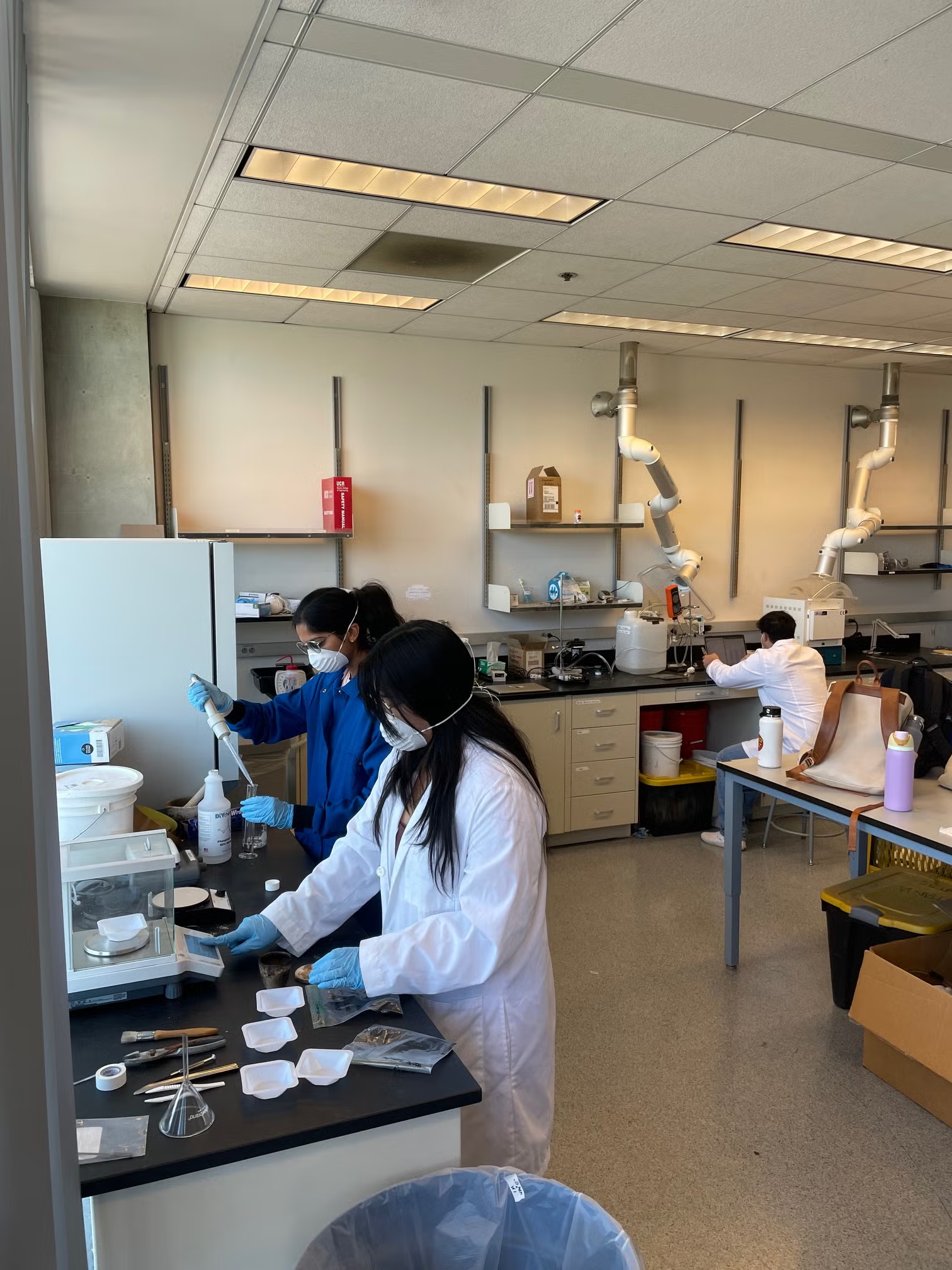
A high school student conducting independent research in a lab setting, the kind of academic initiative Harvard admissions officers look for in applicants
Doing independent research before applying demonstrates something a transcript cannot: that you pursued a question because you wanted to answer it, not because it was assigned. It gives you a specific, technically defensible body of work to reference in your personal statement and supplemental essays. It creates a thread of intellectual consistency across your application. And if the research is strong enough, it can result in publication, conference presentation, or competition recognition, any of which elevates your extracurricular profile significantly.
Veritas AI was built for exactly this purpose. High school students work one-on-one with mentors from Harvard, MIT, Stanford, and leading AI companies to develop original applied AI research projects in domains like computer vision, NLP, healthcare, and environmental modeling. The curriculum covers machine learning, Python, data analysis, and model evaluation at a depth that produces real technical competency, not just surface-level exposure. Programs culminate in a completed research project and presentation, with a track record of students publishing and presenting their work. If you are a student aiming at Harvard whose academic profile is strong but whose intellectual initiative hasn't yet been made tangible, this is the most direct path to doing that. Apply to Veritas AI here.
Our tips by intended major
Harvard's admissions process is holistic and does not explicitly admit by major. But the intellectual narrative of your application should be coherent with what you intend to study. Here's what strong applicants tend to look like in the most competitive fields.
1. Computer Science and Engineering
CS is one of Harvard's most competitive concentrations. The strongest applicants have built real projects, contributed to open-source software, done research, or competed in USACO, ICPC, or similar competitions. Coursework in linear algebra, multivariable calculus, and statistics signals readiness for Harvard's theory-heavy CS curriculum. Research experience in ML, systems, or theory is highly differentiating. Harvard's CS department page is worth reading to understand the research culture you'd be entering.
2. Life Sciences and Pre-Med
Harvard has no pre-med major, but Biology, Neuroscience, Chemistry, and Human Developmental and Regenerative Biology are common pathways. Strong applicants have lab experience, not just biology olympiad medals. Doing research in a university lab, hospital, or through a program like Veritas AI in biomedical AI is far more compelling than a long list of science electives. If you're interested in biology and AI together, this is an especially productive intersection right now.
3. Economics and Applied Mathematics
These are among Harvard's largest concentrations. Applicants who can demonstrate quantitative aptitude through AMC/AIME performance, economics competitions, or original data analysis projects stand out. Publishing a policy analysis or economic commentary in a student journal, or placing in the National Economics Challenge or similar competition, signals genuine engagement with the field beyond coursework.
4. Social Sciences, Government, and History
Strength in writing, evidence of civic engagement, and original analytical thinking distinguish top applicants here. Intercollegiate debate, Model UN leadership at a national level, published opinion pieces, or original historical research all demonstrate the analytical and rhetorical skills that Harvard's social science faculty value. Harvard's undergraduate government program produces an unusually high proportion of public figures, and the admissions readers in this space are looking for students who will engage seriously with ideas, not just collect credentials.
5. Humanities and Creative Arts
These are often the most competitive areas to be admitted to at Harvard, because the applicant pool is smaller and the bar for creative or intellectual distinction is high. A strong creative writing portfolio, original research in literature or history, proficiency in a language beyond high school level, or demonstrated engagement with the arts (published work, notable performance, original production) are what distinguish applicants in this space.
6. STEM Research and Applied Sciences
Physics, Chemistry, Mathematics, and Earth Science applicants benefit significantly from competition performance (USAMO, USNCO, IPhO, Science Olympiad nationals) and from research experience. A completed research project with results, ideally one that has been submitted to a science fair or journal, is the most compelling application artifact in this category. Admissions readers can tell the difference between a student who did a lab rotation and one who engaged intellectually with a research question.
How expensive is Harvard? Should I apply for financial aid?
One barrier that deters many qualified applicants is cost. This is a factual misunderstanding worth correcting. Harvard's financial aid program is among the most generous in the world. Harvard's financial aid office states that families earning under $85,000 per year pay nothing. Families earning between $85,000 and $150,000 pay 0 to 10% of income. Above $150,000, aid is scaled based on family financial circumstances.
The average Harvard grant covers over 60% of the cost of attendance. More than 55% of enrolled students receive grant aid, and the average grant exceeds $60,000 per year. Harvard meets 100% of demonstrated financial need for all admitted students, domestic and international. Cost should not be a reason not to apply.
Harvard's financial aid calculator provides a quick, honest estimate of what your family would actually pay.
Will I get into Harvard if I do their pre-college program?
Short answer: no. And Harvard says so directly. The official Harvard Summer School FAQ states plainly: "Does attending the Harvard Pre-College Program guarantee admission to Harvard? No."
This is worth understanding fully, because a lot of students (and some parents) treat Harvard's pre-college offerings as a back-door signal of interest or a way to demonstrate fit. Admissions officers are aware of exactly how these programs work, and they do not carry the weight many applicants hope they do.
Harvard offers two main pre-college options for high school students. The Pre-College Program is a two-week residential experience open to rising juniors and seniors, focused on living on campus, taking one intensive course, and getting a taste of college life. It is non-credit bearing and has an acceptance rate of roughly 25%, making it far less selective than Harvard College itself. The Secondary School Program (SSP) is a four or seven-week program that offers a broader range of around 200 courses across 50+ subjects, and unlike the Pre-College Program, it does earn transferable college credits. SSP participants take classes alongside enrolled Harvard Summer School students and receive an official Harvard transcript.
Neither program provides a meaningful admissions advantage for Harvard College, and here is why admissions officers are frank about this: both are paid programs. Selective admissions offices distinguish carefully between merit-based experiences (research programs, competitions, selective fellowships) and tuition-paid programs that any academically adequate student with the financial means can attend. Admissions officers know the difference, and including a paid summer program on your activities list as though it were a selective achievement will not strengthen your application.
What these programs can legitimately offer is real, just not what most students think. If you do the SSP, you will have college-level coursework on your transcript with a grade from a Harvard instructor, which can strengthen your academic narrative and potentially serve as a basis for a recommendation letter from a faculty member. Both programs can be valuable for students who genuinely want to experience university-level coursework, test academic independence, or develop essay material around intellectual growth. Harvard's pre-college page also notes that the programs include workshops on college essay writing and financial aid, which has practical value for students early in the application process.
The honest comparison: spending a summer on a selective, merit-based research program, a competitive internship, a national-level competition, or a rigorous independent research project will do more for your Harvard application than either pre-college program. The reason is straightforward. Those experiences demonstrate that others evaluated and selected you based on merit. Harvard's pre-college programs demonstrate that you enrolled in a course you paid for. Both can be worthwhile experiences, but only one of them advances your application.
If you have the financial means and want the experience of living on Harvard's campus, taking a genuinely challenging course, or testing your readiness for university-level work, the SSP in particular can be valuable on its own terms.
What is the best timeline for a student applying to Harvard?
If you're a freshman or sophomore, the most important thing you can do is go deep on something you care about. Choose your activities intentionally, not expansively. Start building the intellectual narrative that will define your application.
If you're a junior, this is the year to get serious: take the most challenging courses available to you, sit for the SAT or ACT and aim for the 75th percentile, begin developing your application narrative, and pursue any independent research or projects that will give you something specific and defensible to write about.
If you're a senior applying this cycle: read Harvard's What We Look For page carefully before touching your essays. Use College Essay Guy's resources for the personal statement. Use AdmissionSight's supplemental guide for the five short essays. Ask teachers who can write specifically about your intellectual engagement. And if you're applying REA, only do so if your application is fully ready.
What sets admitted students apart?
The brutal honesty: Harvard rejects thousands of valedictorians, perfect SAT scorers, and student body presidents every year. The students who are admitted are not simply better at the things everyone does. They have done something that very few people have done, or they bring a quality of intellectual and personal character that stands out even in a pool where everyone is excellent.
The most common mistake is optimizing for breadth at the expense of depth. A long list of activities is less compelling than two or three things you've done with real commitment and distinction. The second most common mistake is writing essays that describe who you want to be rather than showing who you already are through specific, evidence-based storytelling.
The students who get in are usually the ones who didn't build their high school career around getting into Harvard. They built it around something they genuinely cared about, and Harvard noticed.
Resources
From Harvard directly
What We Look For: Harvard's official page on how it evaluates applicants. Read this before you write a single essay.
Harvard Financial Aid Office: Full breakdown of Harvard's need-based aid program, including the no-cost threshold for families earning under $85,000.
Net Price Calculator: Estimate what your family would actually pay before letting cost discourage you from applying.
Application Tips: Harvard's own guidance on submitting a strong application.
Harvard Admissions Office Official Data: Historical acceptance rates and class statistics published directly by Harvard's Institutional Research office.
Harvard Undergraduate Viewbook: Useful for understanding Harvard's academic culture and residential life before writing the "contribution" supplemental essay.
Application and essay resources
Common Application: Harvard accepts applications through the Common App and Coalition App.
College Essay Guy's Harvard Guide: One of the most practically useful free guides to the personal statement and Harvard application requirements.
AdmissionSight's Supplemental Essay Breakdown: Prompt-by-prompt guidance on Harvard's five 150-word supplemental essays for the 2025-2026 cycle.
PrepMaven's Supplemental Essay Guide: Additional strategic guidance on approaching each prompt, written by Harvard alumni tutors.
Harvard Essay Examples via College Advisor: Examples of Harvard essays that worked, with admissions context.
Understanding the admissions process
CollegeVine's Harvard Admissions Guide: Data-driven breakdown of extracurricular tiers, academic benchmarks, and what the admissions process actually rewards.
How Harvard Admissions Officers Rate Your Application: Detailed explanation of Harvard's 1-6 rating system across the six application components.
InGenius Prep's Harvard Guide: Former admissions officer perspective on how Harvard evaluates each part of the application.
Harvard Interview Tips from a Former Officer: Practical guidance on the alumni interview, what it measures, and how to prepare.
Test scores and academic benchmarks
Acely's Harvard Acceptance Rates and Requirements: Covers REA vs. RD strategy, test score benchmarks, and the reinstated testing requirement.
Odyssey College Prep's SAT/ACT Guide: Straightforward breakdown of what test scores Harvard expects and how they factor into the review.
Research and intellectual initiative
Oxford Journal of Student Scholarship: A peer-reviewed journal specifically for high school researchers. A strong target for students with completed science or data research projects.
Veritas AI: Mentored AI and machine learning research program for high school students. Students work with mentors from top universities to build original research projects, with a track record of publication-ready work.
Financial aid and planning
Fair Opportunity Project: Free college admissions and financial aid resources specifically for first-generation and low-income students, recommended directly by Harvard's admissions office.
Harvard's FAFSA Guide: Step-by-step guidance on completing the FAFSA for Harvard applicants.
Frequently Asked Questions
What GPA do you need to get into Harvard? Harvard does not publish a minimum GPA, but approximately 95% of enrolled students have an unweighted GPA above 3.75, and nearly three-quarters report a perfect 4.0. GPA alone is not sufficient. Course rigor matters as much as the grade itself.
Is Harvard test-optional? No. Harvard reinstated its standardized testing requirement starting with applicants to the Class of 2029. SAT or ACT scores are required for all applicants. Competitive scores are 1510 to 1580 SAT and 34 to 36 ACT.
What is Harvard's acceptance rate? The most recently reported overall acceptance rate is 4.2% for the Class of 2029. The Restrictive Early Action rate for the same cycle was approximately 9%. Harvard has not yet released official data for the Class of 2030.
Does applying early action help at Harvard? Historically, early action applicants have seen higher acceptance rates than regular decision applicants, roughly double. Harvard officially states there is no strategic advantage to applying early, but the data suggests otherwise. Apply early only if your application is genuinely ready by November 1.
Does Harvard consider demonstrated interest? No. Harvard explicitly does not track demonstrated interest (campus visits, email opens, event attendance) as part of its admissions process. The application itself is what matters.
What extracurriculars does Harvard look for? Harvard values depth and distinction over breadth. A student with one or two activities at the national or international level (Tier 1) is typically more competitive than one with ten activities at the school level. Research experience, in particular, signals the intellectual initiative that Harvard's admissions process is specifically designed to find.
How important are Harvard's supplemental essays? Very. With a 4.2% acceptance rate and a pool where most applicants have near-identical academic profiles, the supplemental essays are where differentiation happens. Five short essays at 150 words each means roughly 750 total words to show Harvard something about yourself that the rest of the application doesn't cover. Each word should be doing specific, non-redundant work.
Can high school research improve my Harvard application? Yes, significantly. Independent research, particularly when it results in a completed project, publication, or competition placement, is one of the strongest signals of intellectual vitality that Harvard's admissions readers look for. Structured mentored programs that result in real, defensible research output are among the most direct ways to build this part of your application.