

Updated November 2026
TL;DR: Finished a research project and want to share it with real scientists? High school students can present their own research at regional and national conferences, from judged competitions to poster sessions with no scores. If you'd enjoy the challenge of being judged, a competition is a good fit, and if you'd rather just talk about your work, a poster session may suit you better. Either way, you'll want a short abstract, a poster or a timed slide talk, and some practice answering judges' questions.
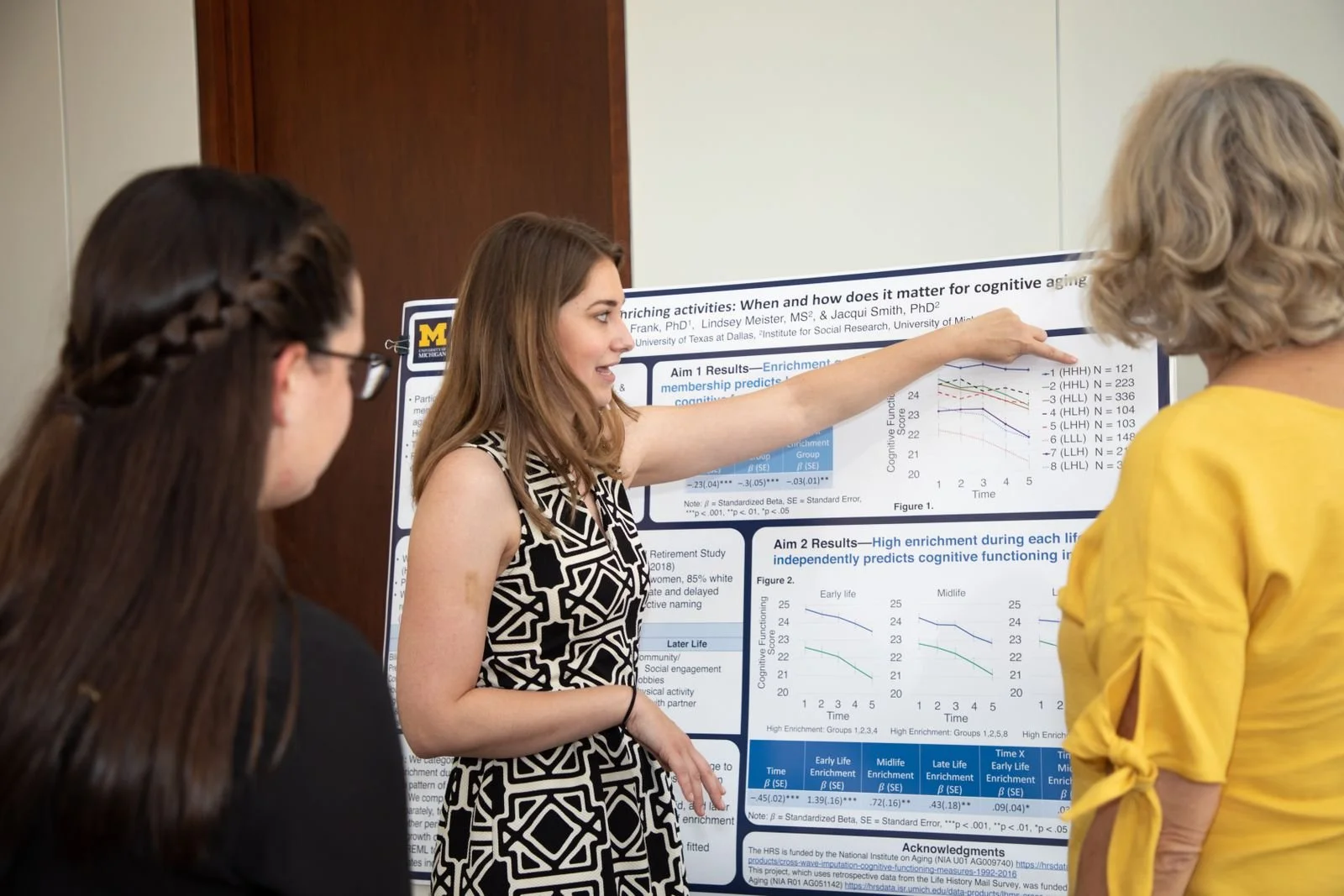
At a research conference, you explain your project to scientists or judges, either in a short slide talk or beside a poster. Presenting your research teaches you to explain it clearly, and the people who listen can tell you how to make it stronger. Some conferences award scholarships, and others let you meet working scientists.
Which research conferences can high school students present at?
JSHS, AJAS, and URTC are three well-known national conferences that welcome high school researchers. Their full names are the Junior Science and Humanities Symposium, the American Junior Academy of Science meeting, and MIT's Undergraduate Research Technology Conference.
JSHS: JSHS is a research competition for grades 9 to 12, sponsored by the US military. In 2025, the top five students from each of JSHS's 49 regional symposia went on to nationals (2025 National JSHS results). Under JSHS's 2026-27 rules, you need to be a US citizen or permanent resident (JSHS core rules).
AJAS: At AJAS, high schoolers present posters at the yearly meeting of the AAAS (American Association for the Advancement of Science). In many states, delegates win a statewide competition run by the state's academy of science (About AJAS). To find yours, check the AJAS affiliated academies directory or ask your science teacher. If your state has no academy route, you can apply as an at-large delegate.
URTC: URTC is a conference at MIT where mostly college students present engineering and technology research. High schoolers can present a poster or a 5-minute lightning talk. You can only submit a full paper if you're in a university research program with a faculty mentor (URTC submission guidelines).
JSHS is only for US citizens and permanent residents. If you're not a US citizen, the International Young Researchers' Conference (IYRC) is another place to present your research. High schoolers give a talk or show a poster there once their abstract passes peer review. For the 2026-27 conference, abstracts were due Oct 20, 2026, ahead of an in-person day at UCLA on Dec 19 and an online day on Jan 23, 2027. Presenters pay a registration fee, and the IYRC also runs paid programs and its own journal (IYRC Winter Conference).
The Harvard Science Research Conference (HSRC) and MIT THINK show up on many lists, but neither is a place to present finished work. HSRC, run by Harvard undergraduates, is a two-day conference for learning about research, with faculty talks, small-group workshops, and mentorship (About HSRC). MIT THINK, run by MIT undergraduates, takes research proposals instead, due Jan 1, 2027, and gives finalists mentorship and up to $1,000 in funding (MIT THINK). So MIT THINK suits a student with a research idea but no results yet.
State academy competitions and regional science fairs are good places to present, too. If you'd rather be judged on a written paper, one of these research competitions for high school students may suit you better than a live presentation.
Which research conference is best for a first presentation?
In our view, a JSHS regional symposium is the best first research conference for most US high schoolers. You compete close to home, judges ask about your methods and results, and you can win scholarships. At the 2025 nationals, the top three speakers in each category won $12,000, $8,000, or $4,000. Here's a simple test. Choose JSHS if you'd enjoy being judged. Choose AJAS if your state academy can nominate you and you'd like to talk with scientists without scores. Choose URTC if your project is in engineering or technology and you can travel to MIT in October.
For most students, JSHS costs far less than AJAS. JSHS's core rules list no entry fee, but some regions have charged a small registration fee, so check with your region before you register. AJAS charges $500 for each student and each adult, including the registered adult chaperone that students under 18 must bring (AJAS conference information). AJAS offers no financial aid for 2027. If you finish in your region's top five, JSHS invites you to nationals with your expenses paid (JSHS awards).
When are research conferences for high school students held?
JSHS and AJAS both meet in late winter or spring, so you'll do most of your preparing over the winter. JSHS regional winners go on to nationals each April. URTC meets in October instead. Here are the key facts for 2026-27, as of November 2026:
AJAS 2027: Feb 17-20, 2027, in Chicago. Register by Dec 2, 2026, if you're already a delegate. If not, aim for next year's meeting.
JSHS regionals: Regional symposia are held in January and February, and each region sets its own registration deadline (JSHS core rules).
URTC: The next conference is Oct 8-10, 2027, at MIT.
What to prepare before a research conference
Before most research conferences, you'll need approval for any research with people, a finished abstract, and a record of who helped you. Here are 5 things to have ready before you register.
Approval for research with people: If your project involves people, even just a survey, JSHS requires approval from an IRB (Institutional Review Board) before you start. An IRB is a committee that reviews research with people. Most students use a review committee at their school, which JSHS says must include a doctor or registered nurse. You also need consent from everyone who takes part (JSHS core rules).
A short abstract: An abstract is a one-paragraph summary of your project. JSHS caps it at 250 words and asks for your hypothesis and conclusions (JSHS core rules).
Your paper, if the conference asks for one: JSHS speakers send a full paper of 5 to 20 pages. You'll write it in APA student format, a common style for layout and citations. Any topic works. If your project uses AI, you can follow these steps for writing an AI research paper in high school.
A statement of outside assistance: On this JSHS form, you describe your own role and any help you got. Be sure to use the 2026-27 version.
A record of any AI tool use: Under JSHS's 2026-27 rules, you can use AI to edit or rephrase your writing. But you can't use it to write your abstract or conclusions, choose your research question, design your experiment, or invent data or citations. You also can't present an AI-written script as your own. List any AI use on your statement of outside assistance. Your project documentation also needs an AI Use Statement naming each tool, what you used it for, and how you checked its output. Ask your regional director whether it goes in your paper or on a separate page.
Getting these five things ready takes time, and it's easier with a mentor. If your project uses AI, you can get one-on-one help in the AI Fellowship at Veritas AI. You'll meet your mentor for 15 private sessions while you design and run your own study. In Veritas AI's AI Fellowship, you'll also have four sessions with a publication specialist and finish with a journal or competition submission, or a showcase.
How to make a research poster for a conference
A good conference poster is easy to read from a few feet away and built around one main result. National JSHS boards are 36 inches high by 48 inches wide, with a title at least 1 inch tall and 24-point text (JSHS poster guidelines).
Put everything a judge needs on the poster itself. Some conferences, like JSHS, don't allow laptops, handouts, or QR codes. Here are 5 tips for any project, with AI examples.
Lead with your question. Put your research question at the top, in one sentence a parent could follow.
Make your main result the biggest figure. That could be a chart comparing your model with a baseline, which is a simple method you're trying to beat.
Show where your data came from. Name your dataset and say how many examples you used.
Add a small limitations box. List the kinds of data your model wasn't tested on.
Practice a short spoken summary. We suggest 2 to 3 minutes, though no conference requires it.
How to prepare a research talk that fits the time limit
Plan your talk to fit the conference's time limit. At JSHS, you get up to 12 minutes at both regional and national symposia, then up to 6 minutes of questions (JSHS core rules). At nationals, you'll get a signal at 10 minutes, and you have to stop at 12 even if you're not done (JSHS oral guidelines). Here's a 4-step rehearsal plan, counting back from your conference date.
Four weeks out, plan your slides. Use about one slide per minute of talk time.
Three weeks out, record yourself. Time each slide, and trim any that runs over a minute. For JSHS, aim to finish around 11 minutes.
Two weeks out, present to someone new. Ask a teacher or parent who doesn't know your project which part confused them.
One week out, practice every day. Run the full talk with a timer, and end each run with someone quizzing you.
How to answer judges' questions at a research conference
Judges at a research conference ask questions to see how well you understand your own project, and you can prepare for most of them. Here are 4 tips.
List the 10 questions you'd ask about your project. Then practice a short answer to each one out loud. Start with "Why did you pick this question?" and "What would you do next?"
Expect questions about your data and your methods. If your project uses AI, judges may ask why you picked your dataset and what you compared your model against. They may also ask which parts you did yourself.
Repeat the question before you answer. JSHS asks speakers to do this so the audience can follow. You might say, "So you're asking why I used 500 images?"
Be honest about what you didn't test. You can say you didn't try something, then explain how you would. For example, "I didn't test night photos, but I'd try that next."
FAQs
Is a science fair the same as a research conference?
Not quite, though they overlap. At a science fair, judges score and rank every project, and winners move up through nearly 400 affiliated fairs to Regeneron ISEF. A research conference is where you present your work to scientists, and only some conferences, like JSHS, are judged. You can compare options in this list of science fairs for high school students.
Can you present an AI project at a high school research conference?
Yes. JSHS lists artificial intelligence in its Mathematics and Computer Science category, so an AI project fits. If you're new to coding, you can learn Python and AI step by step in AI Scholars at Veritas AI. You'd learn in live online classes with four other students and a mentor, then build a group AI project.
Do you need a school to sponsor you for JSHS?
No, under JSHS's 2026-27 rules, you don't need a teacher, mentor, or school sponsor to register. JSHS does require a qualified teacher or mentor to supervise any research with people or animals.
What do you get for presenting at AJAS?
Every student who registers, attends, and presents a poster at AJAS receives an AJAS Fellowship (AJAS FAQ). AJAS describes itself as an honor society for high schoolers who do original research, and it doesn't score or rank anyone. You also get into most AAAS events, where you can meet working scientists.
Sources
You can check each year's details on the official pages.
Present Your Own AI Research With Veritas AI
If you want to present research you built yourself, Veritas AI can help you get there. More than 3,200 students from over 160 countries have taken part in Veritas AI programs. More than 200 mentors teach there, including researchers at Anthropic, Meta, and NVIDIA. At Veritas AI, students build a real research project with a mentor. According to Veritas AI internal data, 79% of the papers they've submitted have been published. You can compare the programs to see where you'd like to begin.
About the author: Tyler Moulton is the General Manager of the Lumiere Research Scholar Program and a former Harvard and Cambridge researcher in AI and astronomy.