
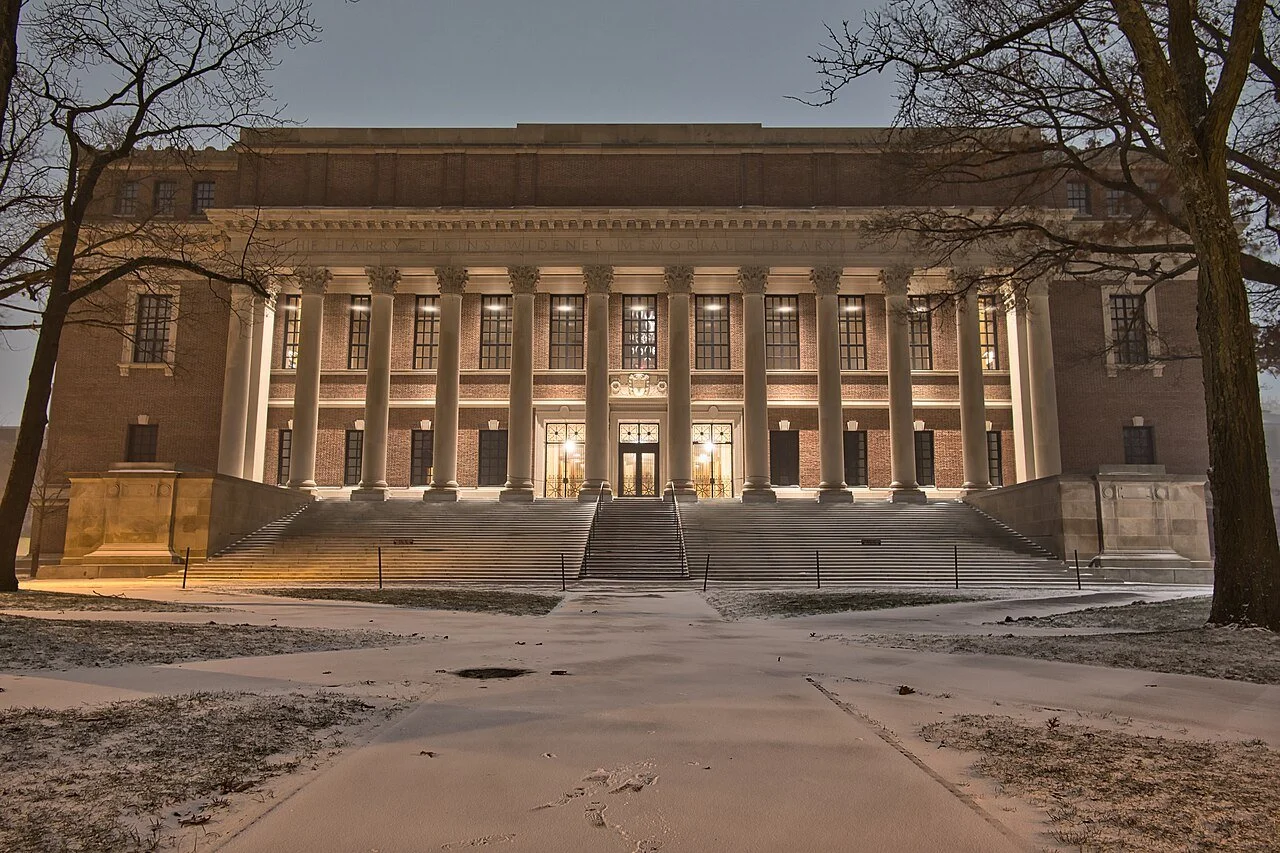
Photo: Chris Rycroft, CC BY 2.0, via Wikimedia Commons.
Updated November 2026
TL;DR: Dreaming of a summer at Harvard? Harvard has six summer options for high schoolers, from two weeks with no grades to seven weeks for college credit. The right Harvard summer program for you depends on whether you want credit, how long you can stay, and where you live. Harvard calls its Summer School programs selective, but there's no minimum GPA and test scores are optional. And if you'd like the best shot at financial aid, it's worth applying by Jan 13, 2027.
If you're a high schooler curious about Harvard, a summer program lets you live in the dorms and take real Harvard classes. Harvard Summer School runs the two biggest programs, the Pre-College Program and the Secondary School Program (SSP). Harvard also runs a few smaller programs for students who live nearby.
How to choose a Harvard summer program
Most students choose between Harvard's Pre-College Program and the SSP, and the biggest difference between them is college credit. Here's a quick test:
You want to explore a subject without grade pressure: Pre-College is the better fit.
You want college credit and a real college workload: The SSP is the better fit.
You live in Boston, Cambridge, or nearby: You can also look at the three local programs, which don't charge tuition.
You mostly want to study AI: Harvard's courses cover many subjects, so you can also compare these AI summer pre-college programs.
If you're still torn, here's where we'd start. For most students, our pick is the 4-week SSP, since it gives you a Harvard grade in one month. You can live on campus, commute, or take one of its few online courses.
To attend Harvard Summer School in 2027, you need to be at least 16 by June 13, 2027. You also can't turn 19 before July 31, 2027 (age rules).
Harvard Summer School programs for high school students
Harvard Summer School offers high schoolers three options: the Pre-College Program, the 4-week SSP, and the 7-week SSP. Here are the key facts, as of November 2026.
Who it's for: Students in 10th or 11th grade this school year, who will graduate in 2028 or 2029.
Format and length: Two weeks living on Harvard's campus. There's no online or commuting option.
Dates: Three sessions in 2027: June 21 to July 2, July 12 to 23, and July 26 to Aug 6.
Cost: $6,250 per session for 2027, which covers tuition, housing, meals, activities, and insurance. The application fee is $75.
How to apply: Apply through Harvard Summer School's one application, where you can list more than one program in order of preference.
What you do: You pick one of nearly 30 courses, in areas like writing, psychology and medicine, law, and business. You'll spend about three hours a day in a class of about 15 students, plus 2 to 4 hours on homework. Outside class, you'll go to talks by Harvard scholars, college-prep workshops, and social events like trivia nights and talent shows. You can also go on trips to museums, a Red Sox game, or a whale watch.
Best for: Trying a Harvard course and campus life without grade pressure.
Watch out for: No grades or credit, and no option to commute or study online.
Secondary School Program, 4 weeks
Who it's for: Students in 10th, 11th, or 12th grade this school year, who will graduate in 2027, 2028, or 2029.
Format and length: Four weeks, living on campus, commuting, or online. Harvard offers only a few courses online.
Dates: Session I runs June 14 to July 8, 2027. Session II runs July 12 to Aug 5, 2027.
Cost: For 2027, it's $9,260 to live on campus, or $4,180 online or commuting.
How to apply: Use the same Harvard Summer School application.
What you do: You take one fast-paced 4-credit course from a list of about 20. You'll get a letter grade and can ask for a Harvard transcript.
Best for: Earning college credit without giving up your whole summer.
Watch out for: You take only one fast-paced course, and few courses run online.
Secondary School Program, 7 weeks
Who it's for: The same students as the 4-week SSP.
Format and length: Seven weeks, living on campus, commuting, or online.
Dates: June 21 to Aug 6, 2027.
Cost: For 2027, it's $15,980 to live on campus and take two courses. Online or commuting, it's $4,180 for one course or $8,160 for two.
How to apply: Use the same Harvard Summer School application.
What you do: If you live on campus, you take two courses (8 credits). Online or commuting students can take one or two. You'll choose from more than 200 courses, taught by Harvard or visiting faculty. You'll study alongside college students and adults, with 8 to 12 hours of work outside class each week per course. In summer 2026, the list included Introduction to Computer Science with Python, which only asks for high school algebra.
Best for: Students ready for a full college workload next to college students and adults.
Watch out for: The highest cost, and 8 to 12 hours of work a week per course.
If that Python course caught your eye, you can start coding long before you get to Cambridge. Veritas AI's AI Scholars program teaches Python and AI to complete beginners, and each mentor works with just 5 students. Later, you and 3 or 4 other students build an AI project around a problem your group picks.
Harvard summer programs for Boston-area students
Harvard runs three summer programs just for Boston-area high schoolers, and none of them charges tuition.
Project Success at Harvard Medical School
Who it's for: High school juniors and seniors who live in Boston or Cambridge.
Format and length: An in-person summer research program. In 2026, it ran for seven weeks.
Cost: None. It's a paid internship, but Harvard Medical School doesn't list the pay.
How to apply: Applications open in November 2026. Harvard Medical School hasn't posted the deadline yet.
What you do: You work in a Harvard Medical School lab or an affiliated lab, with science professionals as your mentors. You'll also join seminars, visit hospitals, and present your research at the end. In 2026, nine students presented, on topics including Alzheimer's disease and bone health in type 1 diabetes (2026 Project Success wrap-up). Our post on reasons to apply to Project Success has more.
Best for: Juniors and seniors who want real lab research close to home.
Watch out for: It's only for Boston and Cambridge residents, and the 2027 deadline isn't posted yet.
Design Discovery Youth at the Harvard Graduate School of Design (GSD)
Who it's for: Students in 9th, 10th, or 11th grade this school year who live within 20 miles of the GSD in Cambridge. You don't need any design experience.
Format and length: Three weeks in person at Gund Hall, the GSD's main building.
Cost: No tuition for students who qualify.
How to apply: Applications for 2027 open in January.
What you do: With Harvard design graduate students as your teachers, you'll sketch, build models, and solve group design challenges.
Best for: Students curious about architecture or design, with no experience needed.
Watch out for: You need to live within 20 miles of the GSD.
Who it's for: 9th graders at public high schools in Boston, Cambridge, or Somerville.
Format and length: Three summers in a row, including career fieldwork and, in the third summer, a seven-week Harvard Summer School course.
Cost: Harvard covers tuition, room, and board. You also get a stipend each summer and a $3,000 college scholarship if you finish all three.
How to apply: Ask a principal, teacher, or counselor at your school to nominate you in 9th grade.
Best for: Local 9th graders who can commit to three summers.
Watch out for: You need a nomination, and Harvard hasn't posted 2027 dates yet.
How selective are Harvard's summer programs?
Harvard calls its Pre-College Program and SSP selective, but there's no minimum GPA and test scores are optional. Harvard doesn't publish an acceptance rate for either one, and it keeps admitting students in a late round until course waitlists fill (admissions page).
When are the Harvard summer program deadlines?
Harvard Summer School applications usually open on Dec 1 and close in three rounds, from mid-January to the end of March. Each summer 2027 deadline is at 11:59 pm Eastern time, as of November 2026 (Harvard Summer School admissions).
Application opens: Dec 1, 2026.
Early deadline: Jan 13, 2027, with decisions by Feb 17. It's also the priority deadline for financial aid.
Regular deadline: Feb 10, 2027, with decisions by Mar 10.
Late deadline: Mar 31, 2027, or sooner if course waitlists fill. Harvard sends late decisions on a rolling basis, and late applicants can't get financial aid.
How to apply to a Harvard summer program
A strong Harvard summer application shows that you're ready for college-level work and that you know why you want your course. The Boston-area programs each use their own application. For Harvard Summer School's one application, here are 4 tips.
Rank the programs in your real order. You can only attend one program each summer, so put your favorite at the top.
Apply in the early round. Early applicants hear back before course registration begins, so you'll get a better pick of courses. If you need financial aid, applying early helps too. Harvard has more aid to give out in the early round, so awards there tend to be larger.
Show why this course, and why now. Harvard says it looks for academic readiness, maturity, and real interest in a challenging summer. In your short essays, describe a class, a book, or a project that made you curious about the course you ranked first.
Ask your counselor early. You'll need a Counselor Report and transcripts from 9th grade on, including your fall 2026 grades. If English isn't your first language, you'll also need TOEFL, IELTS, or Duolingo English test scores.
FAQs
Does going to a Harvard summer program help you get into Harvard?
No, Harvard says its summer programs don't guarantee admission to Harvard College. Harvard Summer School says doing well in its courses will strengthen your application to any college or university. Colleges also care about projects you take on yourself, which our honest guide to getting into Harvard covers. If you already know basic Python and have an AI question you can't stop thinking about, you can dig into it with Veritas AI's AI Fellowship with Publication & Showcase. You'll work one-on-one with a mentor on your own research project, then get help preparing it for a journal, a competition, or a showcase.
Is Harvard Summer School worth it?
Yes, if you'd like to try a real college course while you're still in high school. In the Secondary School Program, you earn a letter grade on a Harvard transcript, so you can show colleges how you handle college work. It's most worth the cost when you pick a course you're curious about and want to keep exploring after the summer ends.
Can international students attend Harvard summer programs?
Yes. International students who need a student visa for the SSP must apply by the regular deadline in February. Students on that visa can't take online classes. For Pre-College, Harvard says you'll need a visitor visa or, if your country qualifies, the ESTA travel system.
Does Harvard give financial aid for its summer programs?
Yes, Harvard Summer School gives need-based aid to US citizens, permanent residents, and DACA students. You ask for Harvard Summer School financial aid in the same application, so there's no separate form to find. For Pre-College, a typical award covers part of the tuition.
Are the Harvard Student Agencies academies part of Harvard Summer School?
No. Programs like the summer business academies are run by Harvard Student Agencies, which calls itself the largest student-run business in the world (About HSA Academies). Harvard undergraduates teach them, on campus or online, but they're separate from Harvard Summer School and its Pre-College Program and SSP.
Are there other Ivy League summer programs like Harvard's?
Yes, several other Ivies run summer programs for high schoolers. Brown, Cornell, and Yale all have summer options you can compare with Harvard's. Brown's Pre-College Programs run one- to six-week sessions, and Cornell Precollege Studies offers online summer courses for rising juniors and seniors. Our list of Yale summer programs for high school students covers Yale's options.
Sources
You can check the latest details on Harvard's own pages.
Take Your Summer Curiosity Further With Veritas AI
Wherever you spend next summer, you can start building something real in AI now with Veritas AI. So far, more than 3,200 students in over 160 countries have studied AI there. You could learn from one of its 200+ mentors, who include researchers from Anthropic, Meta, and NVIDIA. Students at Veritas AI work on a real research project with a mentor who knows the field. Veritas AI internal data shows that 79% of students' submitted papers were published. To pick a program that matches where you are now, you can see how Veritas AI's programs compare.
About the author: Diya Tripathi leads operations at Veritas AI and studied computer science at Ashoka University.